

Skoda reimagines the past with bold all-electric 100 concept
Words by Kyle Cassidy
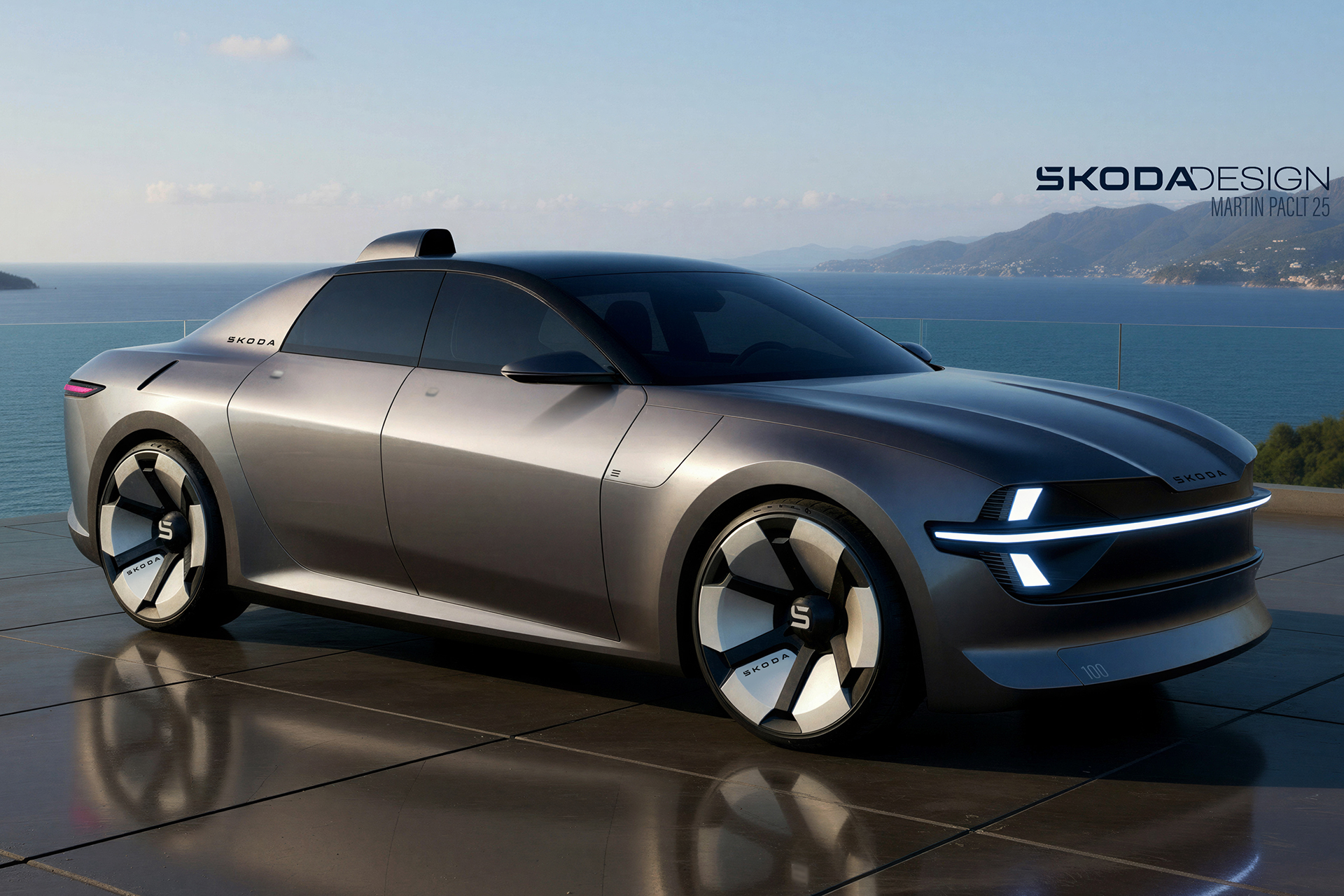
Skoda has revived one of its historic nameplates, unveiling a striking all-electric reinterpretation of the Skoda 100. The original was the brand’s first model to top one million sales. The design study channels the spirit of the 1960s original without ‘slipping into retro pastiche’, and hints at future design thinking from the Czech marque.
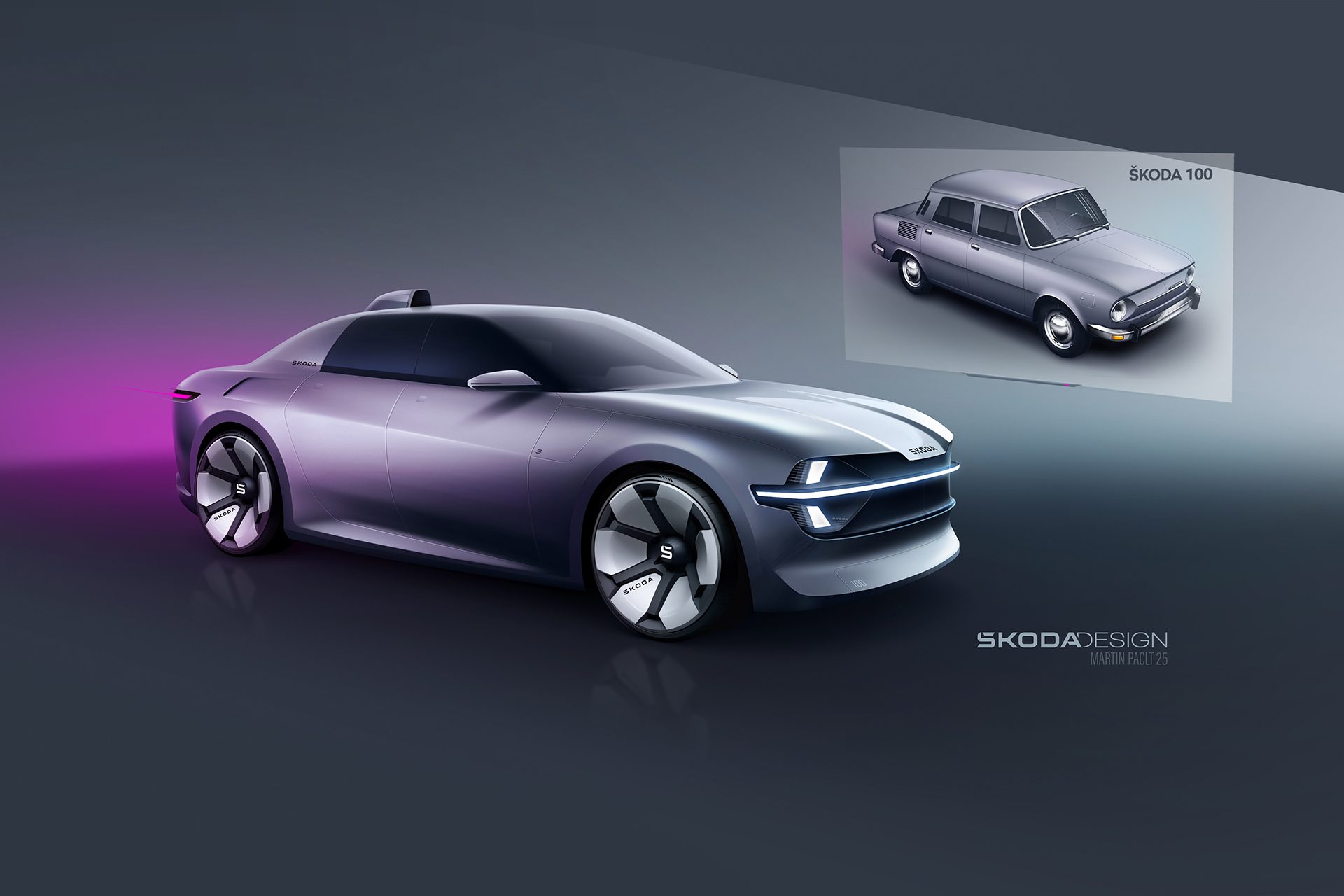
Created by exterior designer Martin Paclt, the concept is said to apply Škoda’s Modern Solid design language to the familiar silhouette of the classic 100. Apparently, Paclt set out to avoid a replica approach, instead focusing on the proportions, stance and character of the original.
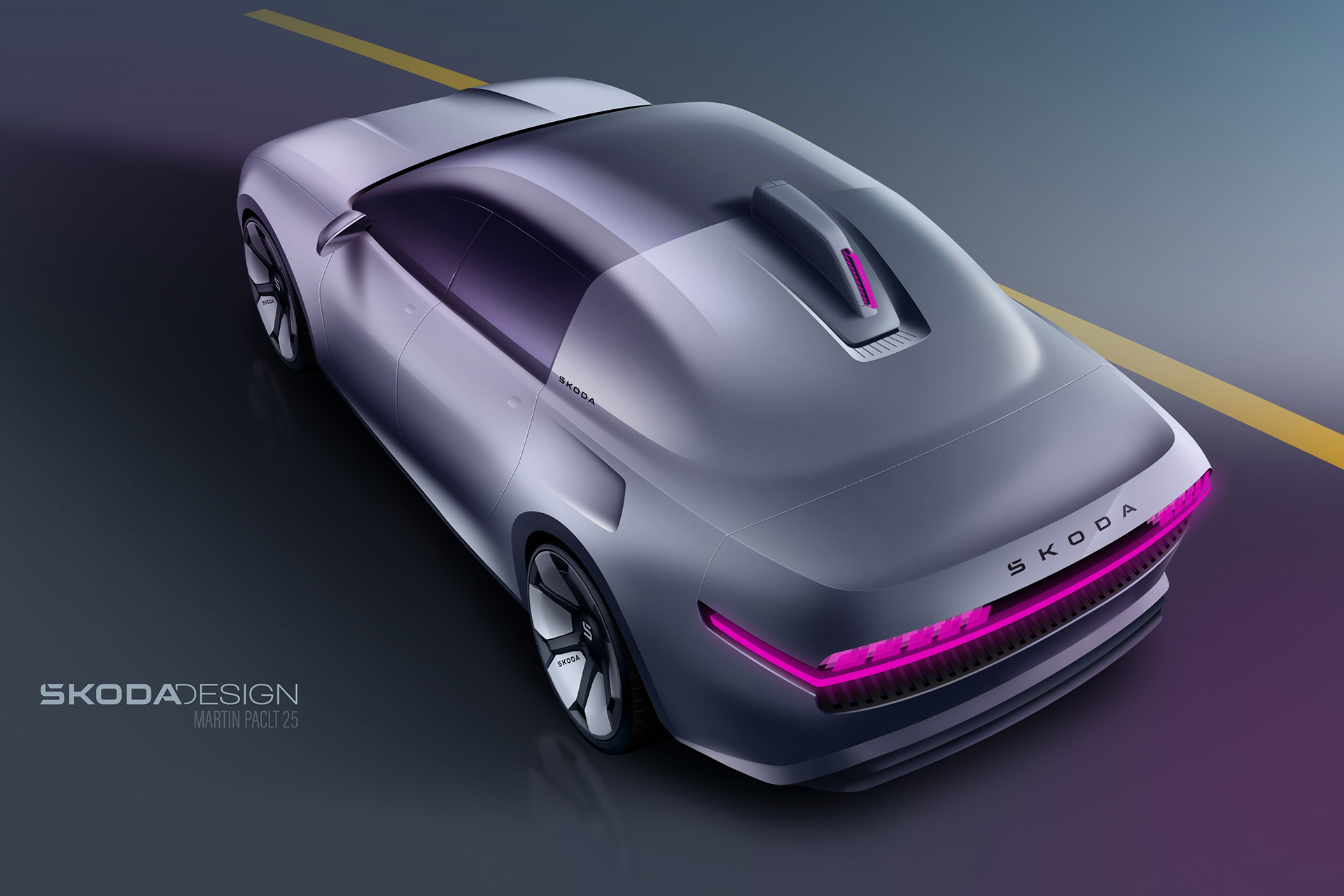
Modern lighting cues include four-element signatures and full-width light strips front and rear. These touches are supposed to reference the chrome highlights and distinctive rear venting of the 1960s car. But one of the most significant twists is at the rear, where Paclt chose to eliminate the rear window entirely. Inspired by the near-identical front and rear glass of the original 100, the move is intended to allow the tail to adopt a sculpted form that mirrors the nose. “It’s a break from convention and will definitely spark emotion. That’s exactly what design should do,” Paclt says.
Read more –Škoda reimagines 110 R coupé for the electric era
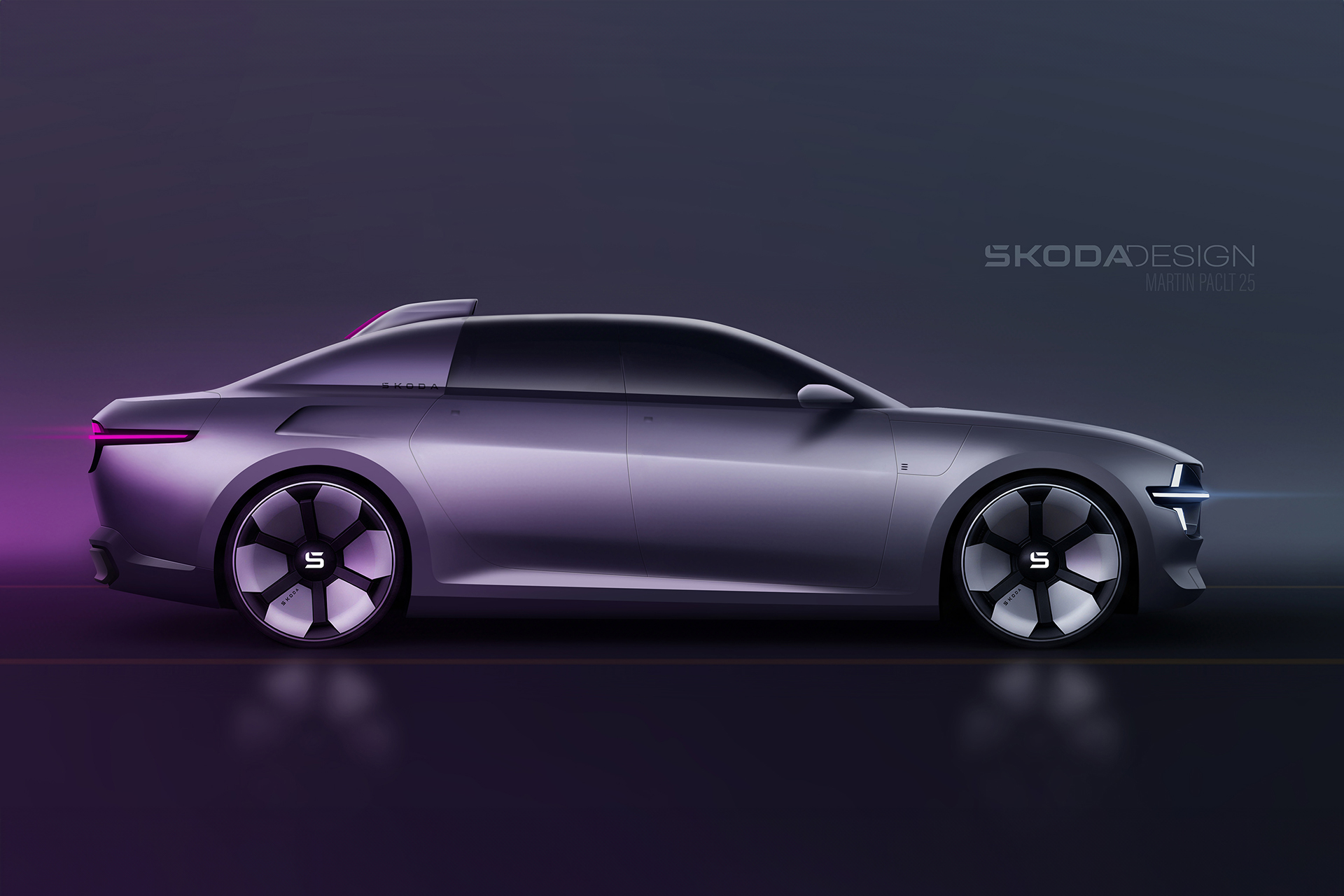
The windowless rear also allowed engineers to integrate a high-mounted fresh-air intake above the roofline, complemented by vents on the rear wings which is a functional nod to the rear-engined layout of the classic model. “Even an electric vehicle requires cooling,” he explains. “Placing the intake high works efficiently and visually emphasises the technical components behind the cabin.”
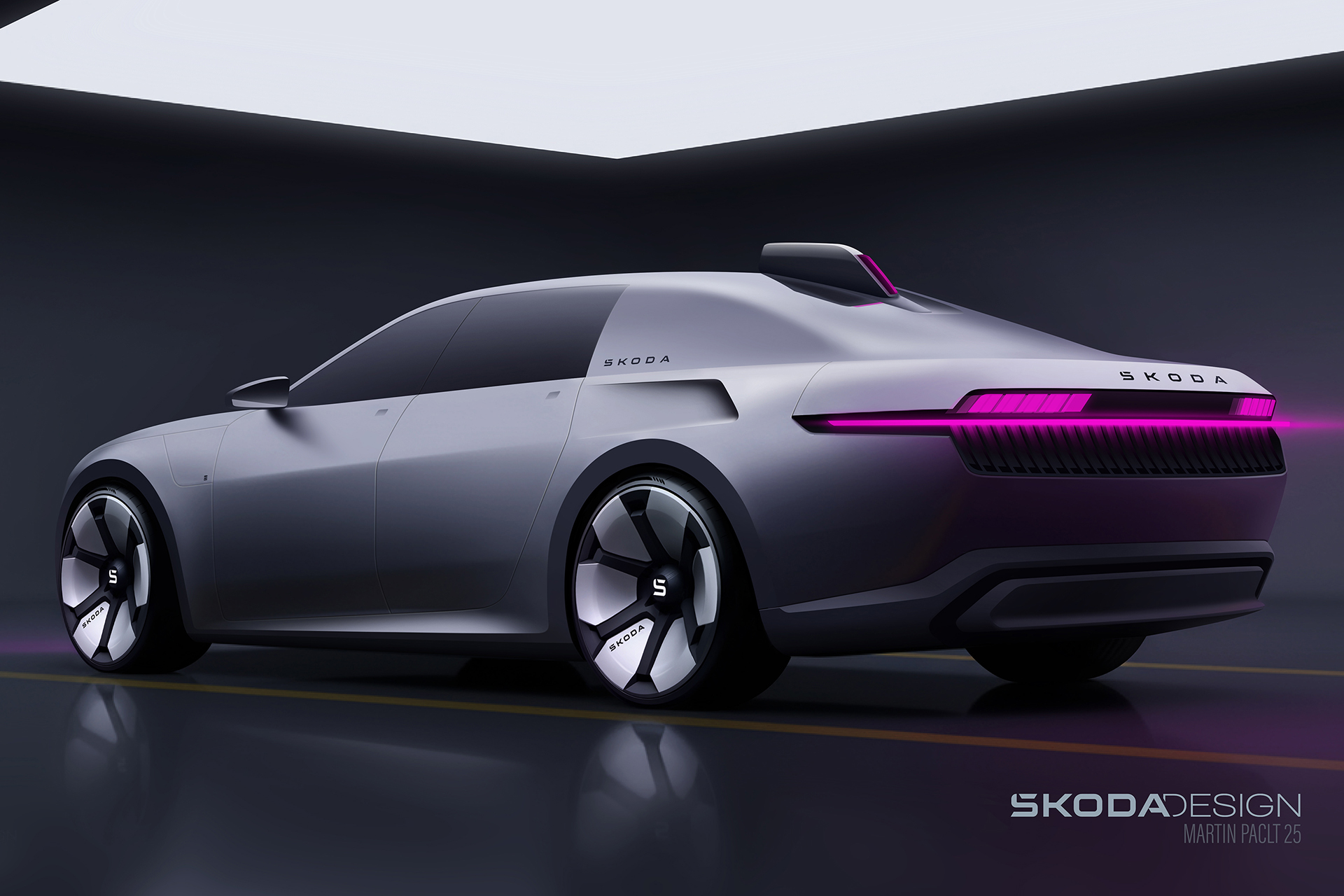
The project began with traditional pencil sketches before progressing into digital modelling. Paclt based the proportions on the current Superb, aiming for a design with more presence than the original. While Škoda says there are no production plans for the 100 concept, the learnings from the project will influence future models.
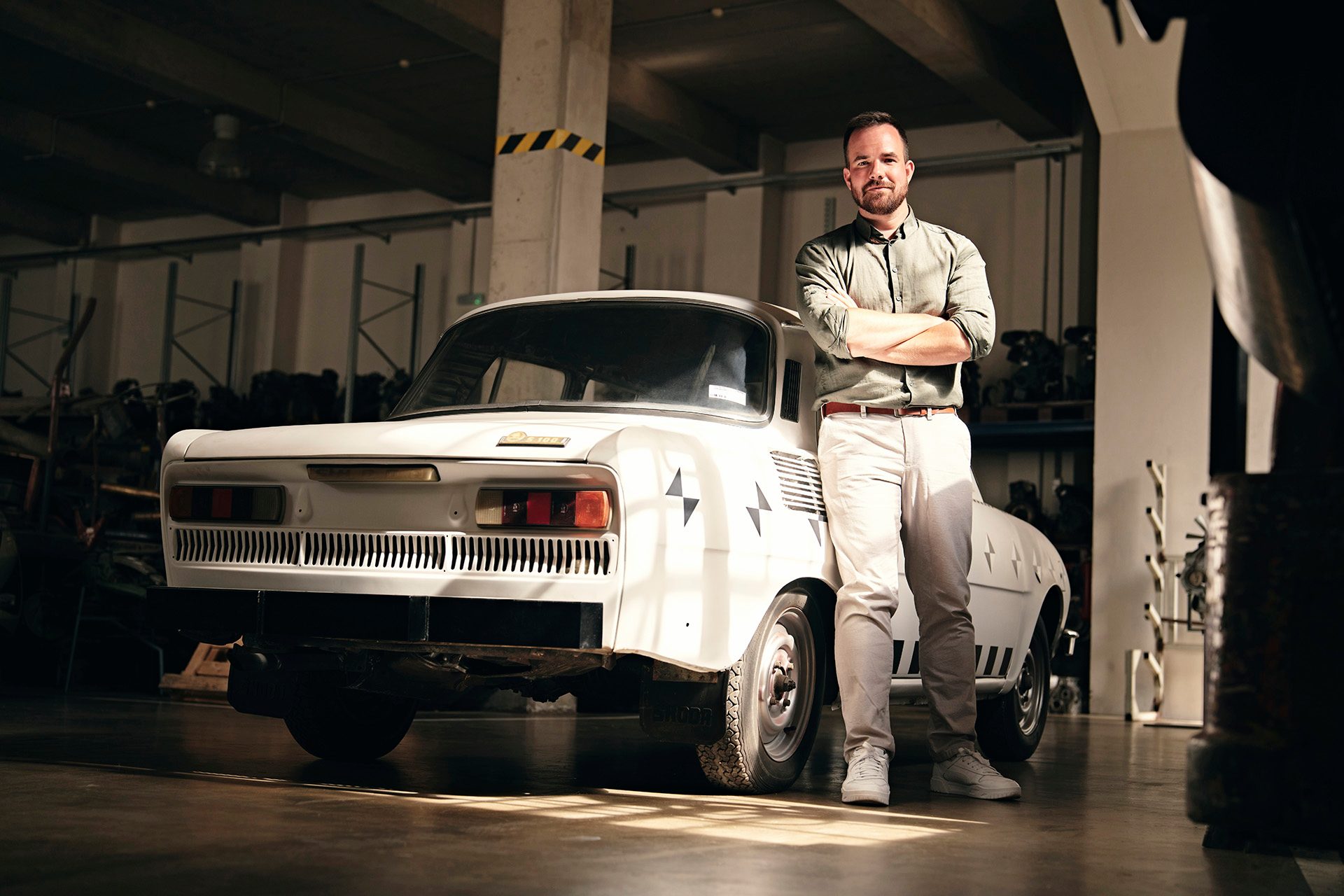
The original Škoda 100/110 series, produced from 1969 to 1977, became the brand’s first million-seller with more than 1.07 million units built. Known for its simple engineering, balanced proportions and practical four-door layout, the range was powered by 1.0- and 1.1-litre four-cylinder engines producing between 48 PS and 63 PS.