

2025 Mitsubishi Outlander 2.5 VRX 4WD Review
Words: Kyle Cassidy | Photos: Alex Schultz
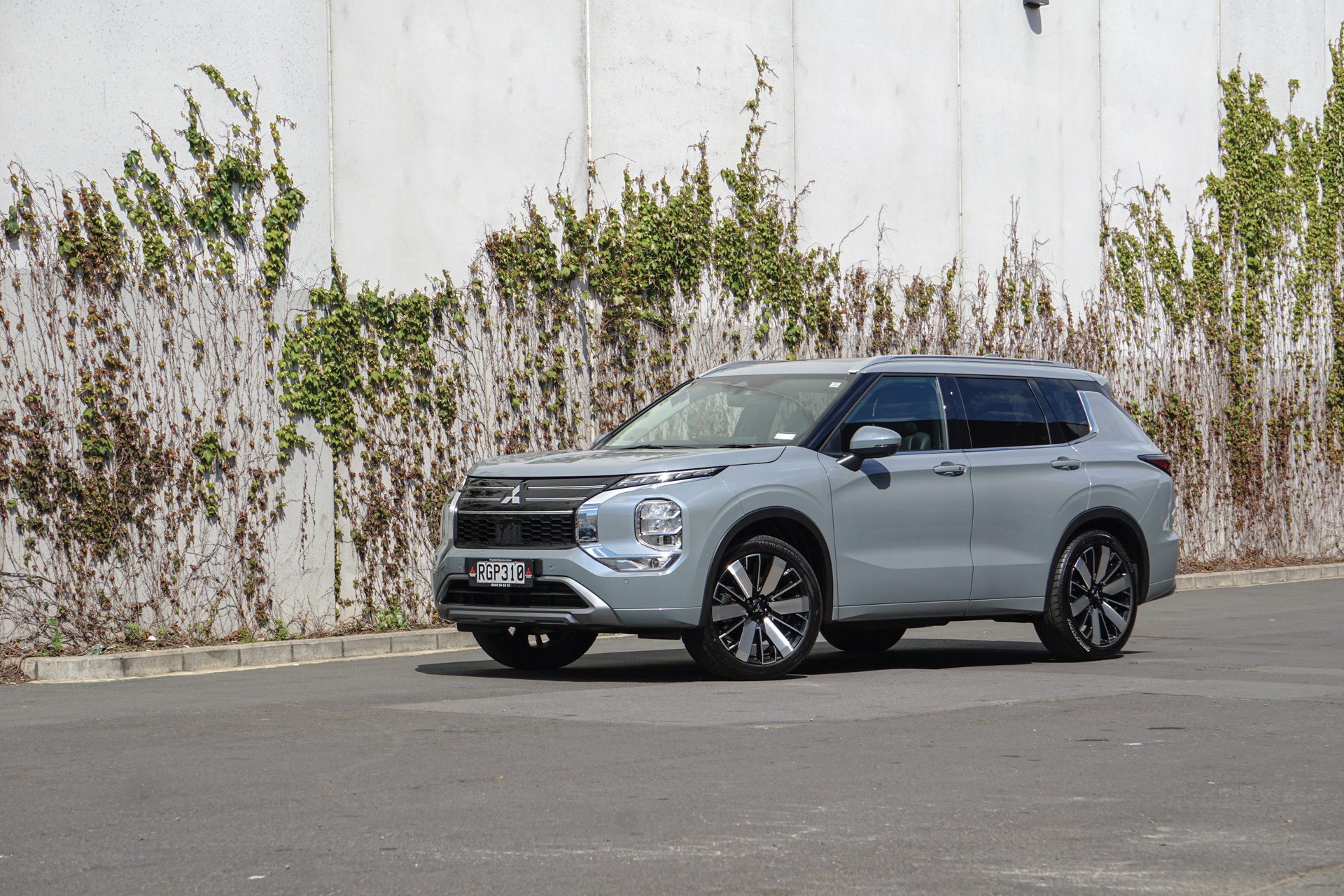
While Mitsubishi doesn’t have a huge range of models, it has key players in the three most popular segments, those being the ASX, Triton and Outlander. These often feature in the top ten sellers list each month, helping Mitsubishi to claim third spot in terms of overall market share. The Outlander is a popular choice in the family SUV space, and recently, it has been upgraded.
We are not talking a radical makeover here, just the usual titivation of the exterior and some additional spec. Keen eyes will spot the smoother front grille, reshaped taillights and the new wheel design. This grey hue is new too.
Inside, all models now benefit from an enlarged 12.3-inch screen on the dash. That’s up from nine-inches previously, and along with a higher resolution, it’s a bit quicker. A bigger screen always helps when using the sat nav map, and relays a better view for the surround camera system. You can now link wirelessly to both CarPlay and Android Auto, and with a decent smattering of buttons about the place, you’re not having to tap and swipe and tap just to get warm feet. And you’ll always have toasty hands in the winter, the VRX model grade now with a wheel warmer. Also new is the addition of seating ventilation, so you should be comfortable all year round in this.
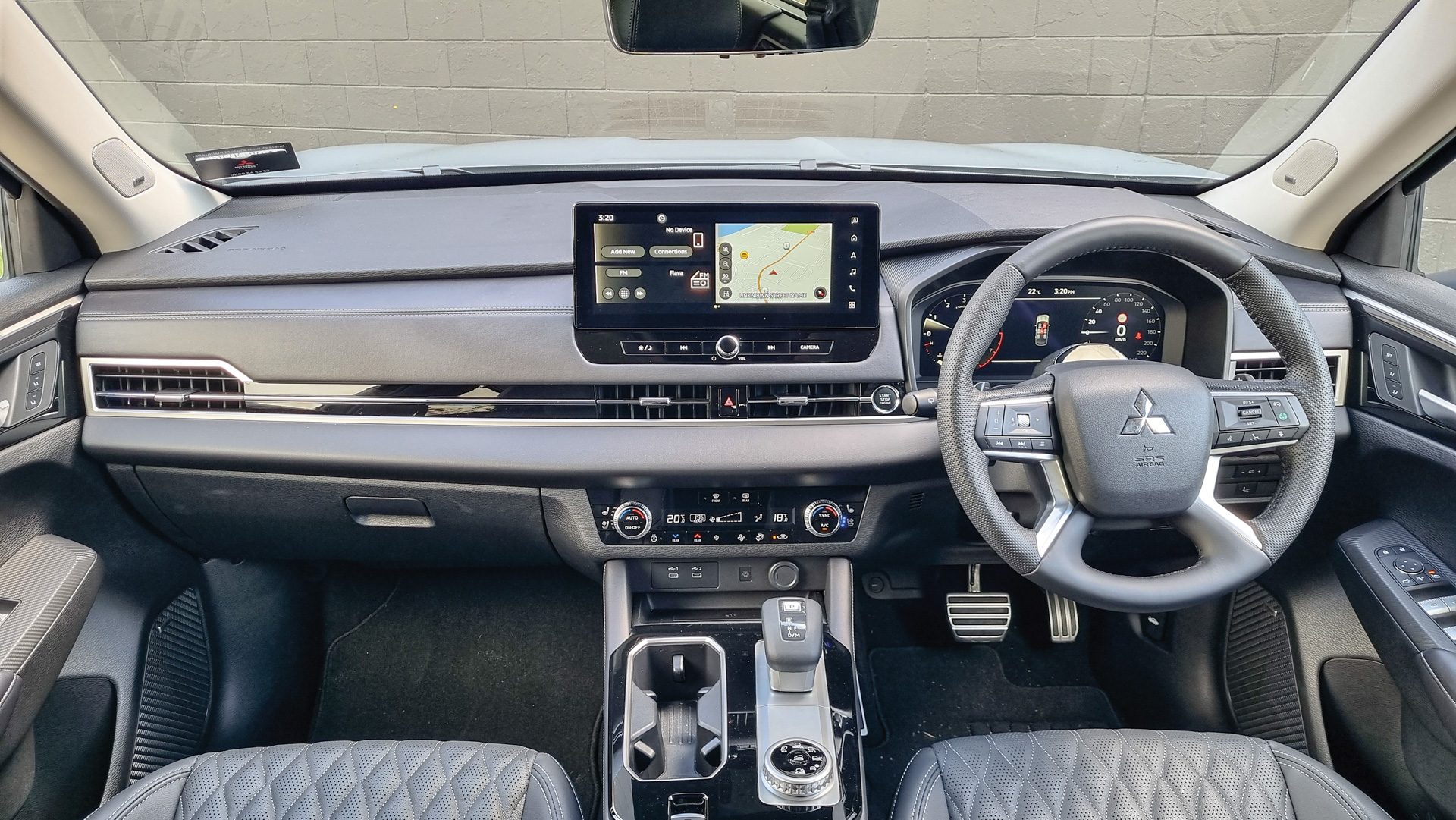
Other minor updates include the repositioning of the cup holders, now making it easier to grab your flat white on the go, improved console storage and they’ve made it harder for your mobile to fly off the charge pad when you’re late in the morning. They’ve also added some bright work around the gear lever which can reflect the sunlight straight to your retinas, especially if you’ve got the shade to the big panoramic roof open.
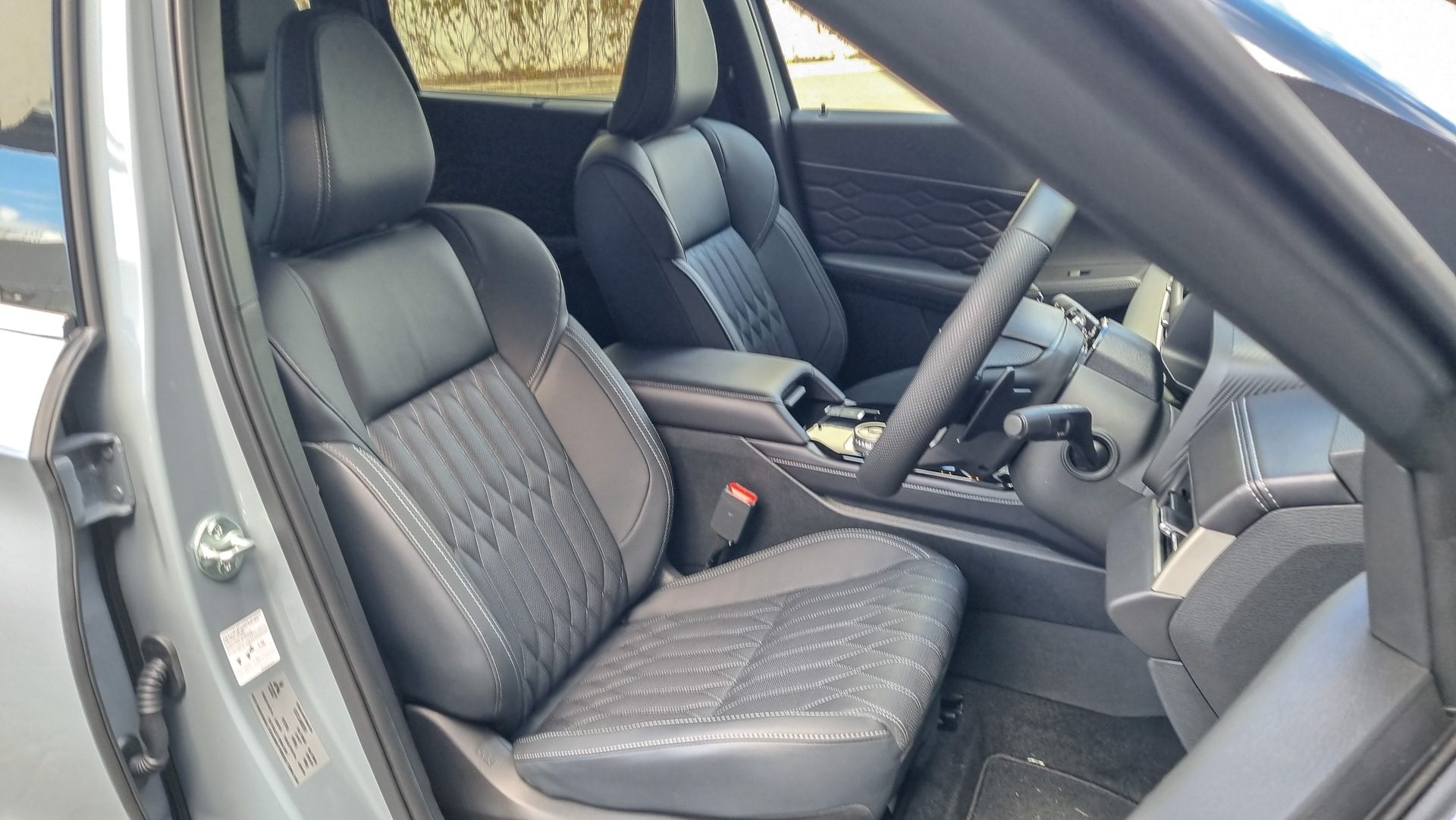
For the VRX, they have added a quilted design to the leather-appointed seats and door cards, a touch of class for this mass market auto. And if you think it’s all a little dark inside, the VRX can be optioned with a light grey interior if you’re brave.
The cabin is well finished, though not all of the hard plastics are covered over. Most touch points are however. The seats get a pass mark, a nice balance of comfort, support and adjustment, making it easy to find a good driving position. Outward vision is not bad, although the high-set bonnet makes it harder to judge the extremities. You’ll be relying on that camera in tight carparks. Though with an 11m turning circle, docking the Outlander isn’t so hard.
Unfortunately they have added the dreaded driver monitoring system, something required for the Outlander to retain its five star ANCAP crash rating. It’s on your case often, dinging away. Thankfully the new speed limit recognition doesn’t issue audible alerts when you stray over, just a blinking light on the display. The lane keeping works as desired, though we wish it only operated above 80km/h. That would stop it from annoying you on city streets. But there are worse offenders out there when it comes to over-active ADAS features.
Powering the Outlander, the 135kW, 2.5-litre petrol engine carries over, running via a CVT, and grounded by on-demand AWD. A 2WD version is available for $4k less if you don’t think you’ll need it. And that saving you could put toward gas. Fuel consumption can trend high if you are ripping around town, where it climbs into the teens. If you can get some motorway miles mixed into your travels, fuel use will settle closer to its official average of 9.0L/100km.
Without any electrification in the driveline mix, the Outlander feels sluggish off the mark. The 2.5’s 244Nm of torque doesn’t chime in properly until 3600rpm, which is where it perks up. The VRX weighs in at 1721kg, and feels it too, even more so with six bods on board. Once up and cruising, the CVT will knock the revs back to 1200rpm around town to ease consumption, though it does need liberal encouragement to spur the horses along again.
The steering action is okay, the ride quality too, but it could do more to better isolate the sharper bumps. Go easy over the speed humps too otherwise you can test the bump stops. It seemed to be a bit quieter on the highway than the old one, and reasonably settled through the curves. It’s thoroughly average in that regard but safe and sensible too.
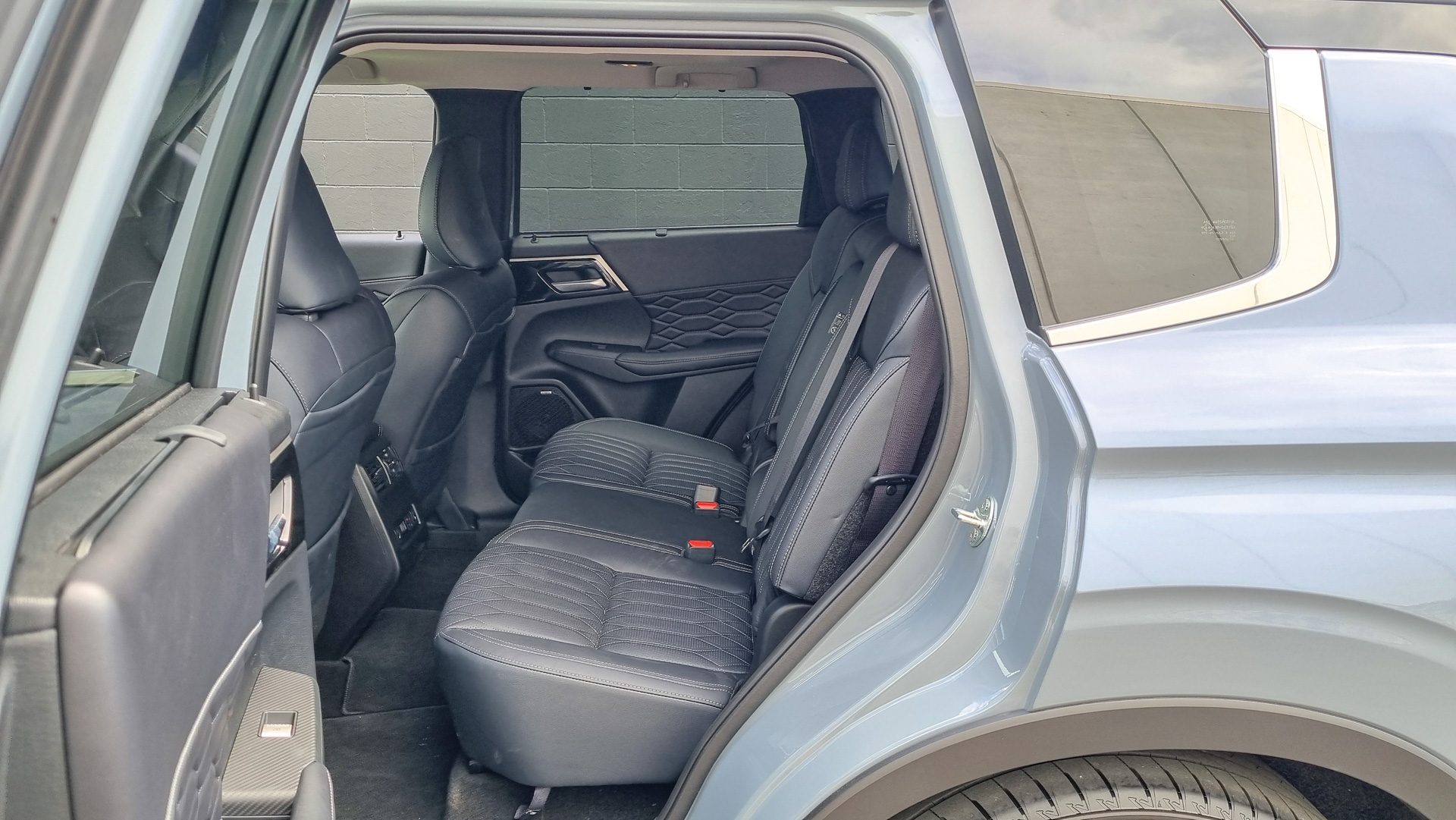
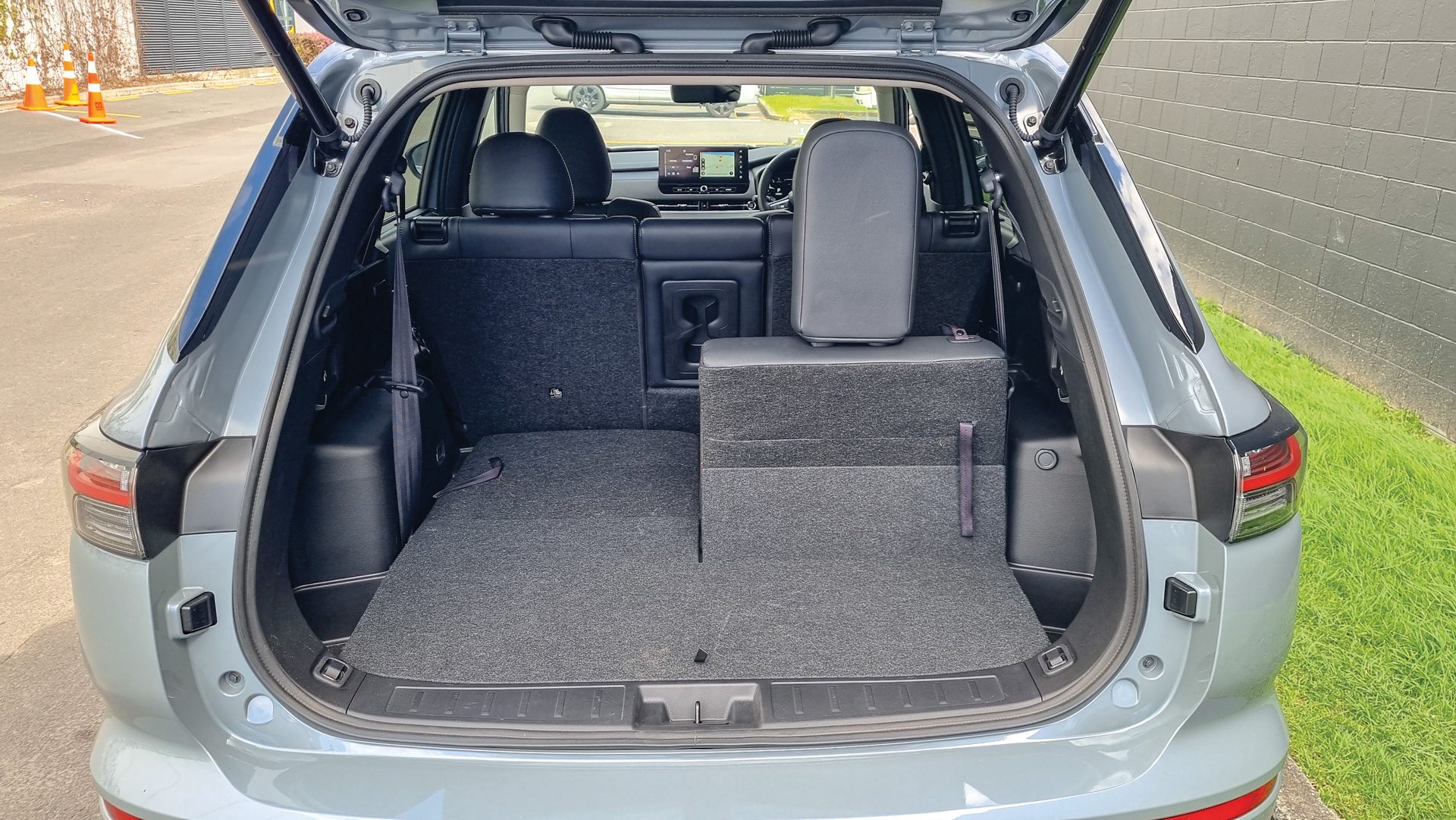
Outlander’s a handy family machine with ample room in the second row and a big boot in five seater mode. The third row is best reserved for the kids but adds versatility to this family car, without having to spend up on a large SUV.

Outlander remains competitive among its usual competitors; a versatile, sharp looking SUV with a decent warranty back up. But new arrivals from China undercut it without skimping on specification, while offering hybrid options that undercut it by many thousands. But if price isn’t everything, this is a better all rounder.
Mitsubishi Outlander 2.5 VRX 4WD
$59,490 / 9.0L/100km / 206g/km
0-100 km/h 9.7s
Engine 2488cc IL4
Max power 135kW@6000rpm
Max torque 244Nm@3600rpm
Drivetrain CVT, on demand AWD
Weight (claimed) 1721kg